Marketplace ideas Food · Delivery
CityEats
Your city's own delivery app: every local restaurant, one app, your commission.
They cook. You run the app, charge half or less of what the giants charge, and the difference stays in your city.
- An idea. Not a company. Yet.
Fund it Our verdict on Pitch Night. Why ↓
- Orders a day
- 120
- Average order
- $32
- You earn, a month
- $20,880
An estimate from illustrative numbers (the “growing” stage), not a promise. Change every one of them ↓
Restaurants are on the apps. Nearly half say it does not pay.
In a 2026 National Restaurant Association survey, 45% of restaurants on delivery apps said those orders are not profitable. They stay on the apps anyway, because that is where the customers are.
It does not have to be an out-of-town giant. In Iowa City, 23 restaurant owners built their own delivery co-op, Chomp, and by 2023 it had passed $32 million in sales. One city. Their own app.
You do not have to be a restaurant owner to do the same. They cook. You run the app. Charge them far less than the up-to-30% top plans, keep the customers local, and you have a business the giants cannot undercut without changing their whole model.
- 45% of restaurants on delivery apps say those orders are not profitable Source: National Restaurant Association, comments to the FTC, 2026
- $32M+ in sales by 2023 for Chomp, the delivery co-op 23 Iowa City restaurant owners built Source: Food On Demand, 2023
Fund it
The Pitch Night verdict · pitched as Forks United
If the restaurants own a piece of it.
- Demand
- Supply
- Margin
The hard question: Who pays the driver?
Who sells. Who buys.
Your sellers
Independent restaurants, takeout spots and cafes that already do delivery and resent what it costs. They do not need convincing that delivery matters. They need a cheaper way to do it that does not hide them behind chains.
Where to find the first ten
- 1Start with owners who complain about the apps in public. They have done the math already.
- 2Sign one anchor restaurant everyone in town knows, then use its name with the next nine.
- 3Go to the restaurant association or the owners' group chat. One meeting reaches twenty owners.
- 4Offer the first ten a founding rate, in writing, for the first year.
- 5Pick restaurants close together. A dense map is what makes delivery fast and cheap.
Your buyers
Everyone in town who already orders dinner on an app. You are not creating a habit. You are giving an existing one a local home, and a reason to switch: the same restaurants, with more of the money staying with them.
How often they come back
Weekly or more for regulars. Food delivery is one of the most repeated purchases there is, which is why the giants fight over it.
How you get paid.
-
Commission
This is where you beat the giants in one sentence: charge half of their top plan or less. Restaurants keep more on every order and you still earn on every order.
On Upzaar: one rate for the marketplace, with an override per seller. Not per category.
-
Service fee
A small flat fee per order is normal in food delivery and customers expect it. Keep it under what the big apps add.
On Upzaar: one flat fee per order, paid by the customer. The marketplace keeps it.
-
Delivery
The hard question on Pitch Night. The customer's delivery fee has to cover the rider, or the restaurant has to chip in. Decide which before you launch.
On Upzaar: you set a delivery fee per zone you draw. Today the driver’s earning for a job is that fee, so the calculator starts your delivery margin at zero.
Know this before you start: orders are paid in cash today.
The customer pays the driver at the door. Card payments are not live yet. The driver app tracks the cash each driver holds, you record their deposits, and the commissions report shows what each seller sold, your cut and the payout due. Plan a weekly settlement with sellers and drivers.
What could CityEats earn you?
Prefilled with our starting assumptions for this idea. Every number is yours to change, and the formula is at the bottom.
Estimate
You earn, per month
An estimate, not a promise$20,880
Before your costs. 18.1% of the order volume.
- Commission
- $17,280
- Service fees
- $3,600
- Delivery margin
- $0
Change the numbers
- Orders per day
- 120
- Average order value
- $32.00
- Your commission
- 15%
- Your service fee per order
- $1.00
- Delivery fee the customer pays
- $4.00
- What you pay the driver
- $4.00
- Days open per month
- 30
This is a worked example. With JavaScript on, you can change every number.
The month
- Orders
- 3,600
- Order volume (GMV)
- $115,200
- Your sellers keep
- $97,920
- Your drivers are paid
- $14,400
One order
- The customer pays
- $37.00
- The seller keeps
- $27.20
- You earn
- $5.80
What your sellers pay in commission, per month
$17,280 a month stays with your sellers. 30% is the published top-plan commission; ads, promos and refunds are extra. Sources: Uber Eats merchant pricing, Restaurant Dive on DoorDash’s plans .
Same numbers, three stages
Only the orders per day change. Pick one to load it.
How this is calculated
- Commission is taken on the order value only, not on delivery or service fees.
- The currency menu swaps the symbol. There is no exchange rate anywhere.
- Not subtracted: your Upzaar plan and its platform fee on order volume (see pricing), payment processing if you add a card gateway, marketing, and your own time. The break-even calculator takes those off.
- Promotions, refunds and canceled orders are not modeled. Real months are lumpier than this.
Where the prefilled numbers come from
- Orders per day (illustrative): Illustrative. 120 orders a day is about 5 a day for each of 25 restaurants. Starting out is 10 restaurants at 3 a day; established is 50 at 8.
- Average order value (illustrative): Illustrative. A dinner for two from a local restaurant; the homepage's toll receipt uses a $40 dinner.
- Commission (illustrative): Illustrative. Half of the 30% published top-plan commission of the big delivery apps.
- Service fee (illustrative): Illustrative. A small flat fee per order.
- Delivery (illustrative): Illustrative. The fee and the rider's pay start equal: on Upzaar today the driver's earning for a job is the delivery fee the customer paid.
- Days open (illustrative): Restaurants deliver every day.
Illustrative means we picked a plausible starting point and told you why. It is not data about a real marketplace. Replace it with what you learn from your own sellers.
What CityEats looks like on Upzaar.
Real screens from Fernhill, our demo marketplace of local food and shops. Yours carries your name, your colors and your sellers.
-
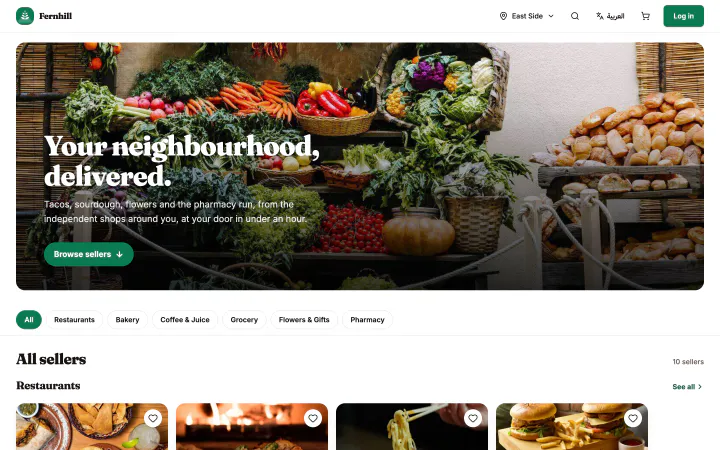
Storefront websiteYour storefront website: the city's restaurants under your name, no app download needed.
-
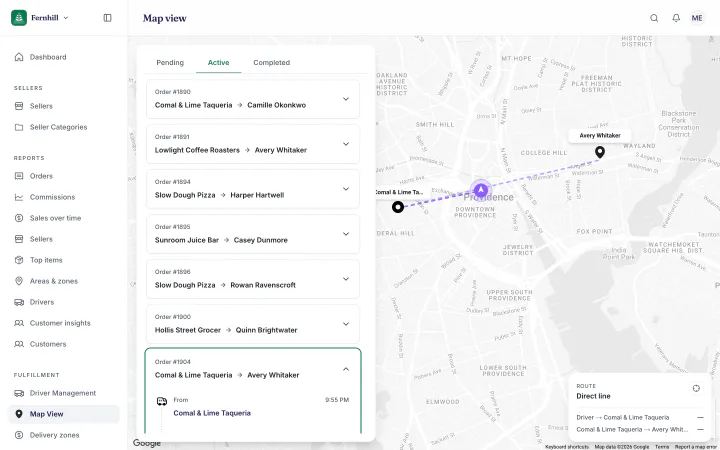
Admin portalYour dispatch map: every active delivery and every rider, live.
-
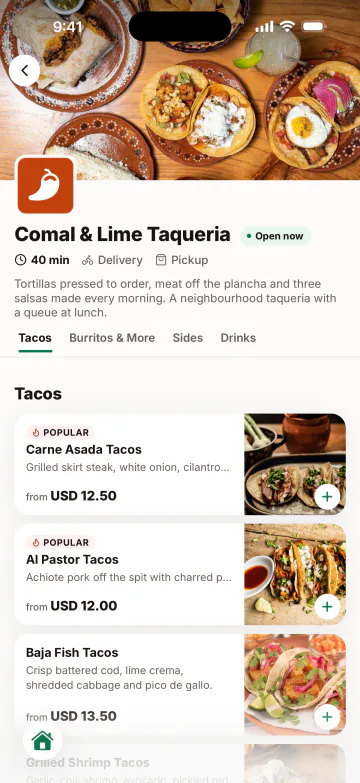
Customer appA restaurant's menu in your app, with delivery and pickup.
-
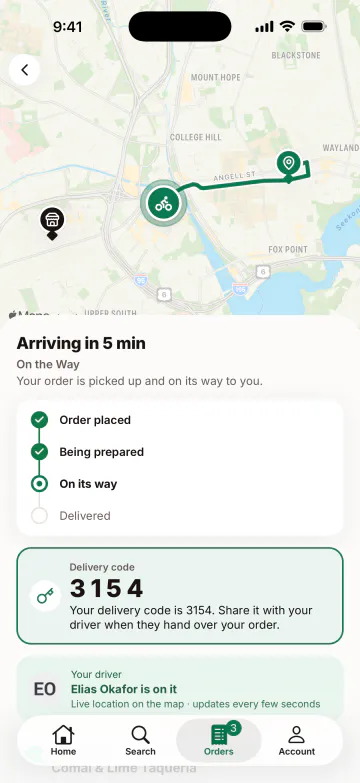
Customer appCustomers follow the rider on the map, with a live arrival time.
-
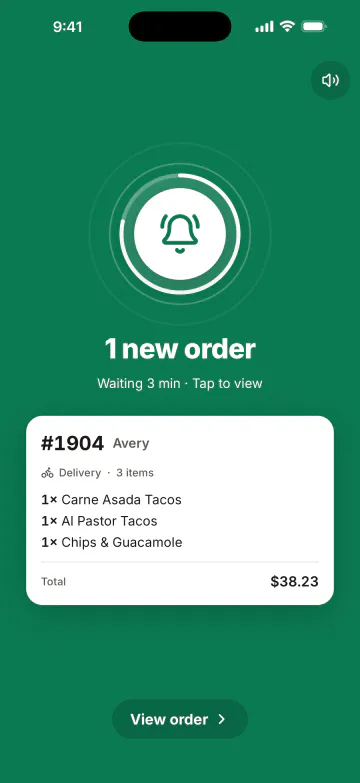
Seller appA new order takes over the restaurant's phone. Hard to miss on a Friday night.
-
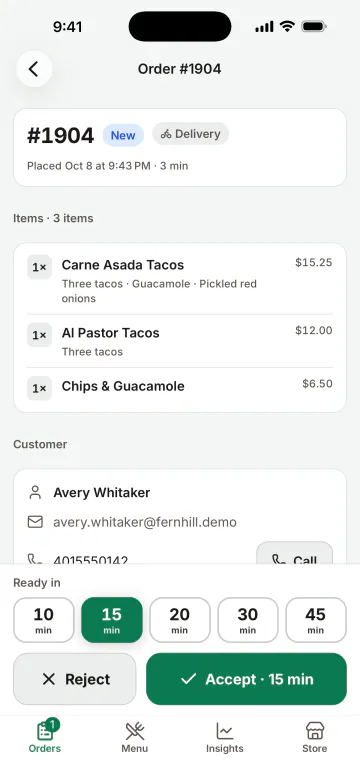
Seller appThe kitchen accepts with a prep time, so the rider arrives when the food is ready.
-
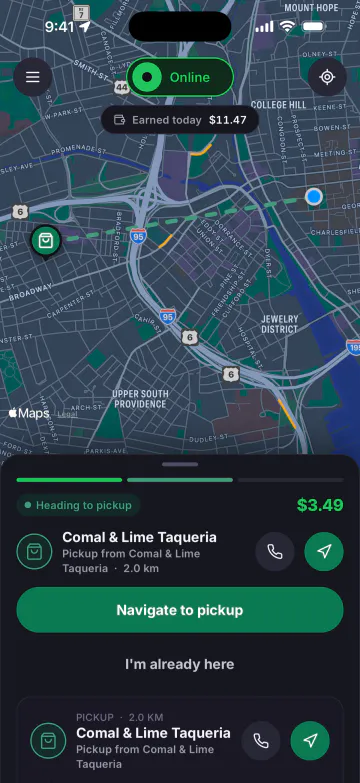
Driver appThe rider is routed to the restaurant, then to the customer.
-
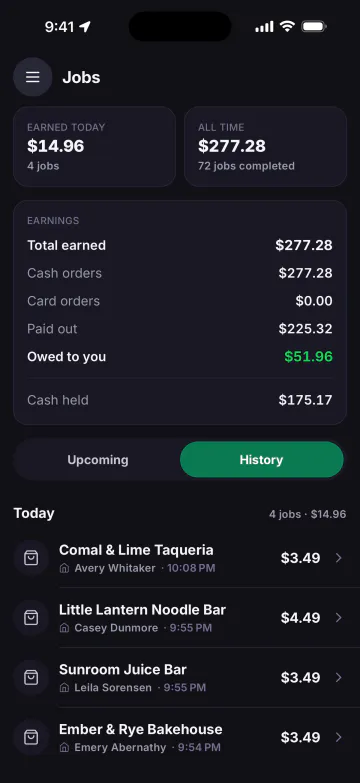
Driver appRiders see what they earned and the cash they hold. You see it too.
Not built yet, and what version one does instead
- Restaurants owning a share of the marketplace
- The verdict said fund it if the restaurants own a piece. Ownership is a legal and business decision between you and them, not a setting in the product. What Upzaar gives you is the commission report to share with them, in the open.
- Charging the restaurant part of the delivery cost
- The delivery fee is set per zone and paid by the customer. If restaurants are to chip in, agree it with them and settle it outside the app, or reflect it in a seller's commission rate.
- Card payments
- Orders are paid in cash today. See “How you get paid” above for how the money moves.
What you would run it on
- The storefront website and the admin portal are in every plan. Enough to prove CityEats with your first sellers.
- Your own customer and seller apps in the app stores come with the next plan up, along with the driver app for your first five drivers.
- Unlimited drivers come with the plan above that. On the first plan, start with pickup or let sellers hand orders over themselves.
The CityEats launch checklist.
-
Week 1
Find the angry ones
- List thirty independent restaurants that deliver today.
- Talk to ten owners about what the apps cost them.
- Tell us what you are building; we set up your storefront.
-
Week 2
Sign the founders
- Sign one anchor restaurant, then nine more nearby.
- Agree the commission and who covers delivery.
- Load menus with photos, options and add-ons.
-
Week 3
Build the fleet
- Draw delivery zones and set the fee for each.
- Recruit five riders and walk them through the driver app.
- Run twenty test orders at dinner time.
-
Week 4
Go live, loudly
- Launch in the restaurants: table cards, bag flyers, their social accounts.
- Open with a free-delivery promo for first orders.
- Publish what restaurants kept versus the big apps.
Read before you start, from Marketplace University
-
Commissions & Pricing
How to Set Your Marketplace Commission Rate
Too high and vendors won't join. Too low and the business doesn't work. Here's how to actually land on a number.
-
Cold Outreach
How to Write a Cold Outreach Message Vendors Actually Reply To
Most vendor cold outreach gets ignored because it reads like a form letter. Here's how to write the kind that gets a reply.
-
Customer Experience
The Psychology of Free Delivery
45% of shoppers abandon carts over shipping costs — why 'free delivery' moves purchase decisions more than the price tag itself.
Ideas next door.
-
Food
Pickup
TruckLine
Every food truck in town in one place. Order ahead, skip the line. They cook at the curb. You take the orders before the customer arrives, and earn a small cut of each. You could earn, at 80 orders a day $2,851 / month -
Food
Delivery
QuadPlate
A college town's local food, delivered to the dorms and run by students. They cook near campus. You own the dorms: student riders, student customers, and a commission local kitchens can afford. You could earn, at 120 orders a day $9,612 / month -
Food
Pickup
OvenDay
Five local bakeries. One pre-order. One pickup. They bake before dawn. You sell it the night before, so nothing is baked that is not already sold. You could earn, at 100 orders a day $2,160 / month
Nobody owns CityEats in your city. Yet.
Tell us where you would start. Our team sets up your storefront with you: your name, your sellers, your commission, live in under a week.
Opens our contact form with this idea filled in. Rather talk first? Book a demo.