Marketplace ideas Retail · Delivery
LeashLocal
Independent pet shops, delivered. The heavy bag arrives every month.
They stock the food. You bring it to the door on repeat, and earn on an order that comes back every month.
- An idea. Not a company. Yet.
Fund it Our verdict on Pitch Night. Why ↓
- Orders a day
- 25
- Average order
- $55
- You earn, a month
- $4,875
An estimate from illustrative numbers (the “growing” stage), not a promise. Change every one of them ↓
A heavy bag of dog food. Empty again next month.
Ninety-five million US households own a pet, according to the 2025 National Pet Owners Survey. Every one of those animals eats every day, and somebody has to carry the bag home.
That bag is the opening. It is heavy, it is the same every time, and it runs out on a schedule. The national online sellers built their business on exactly that order. The independent pet shop, which knows the dog’s name and stocks the food the vet recommended, has no way to offer the same convenience.
So: they stock the food, you bring it every month. Fund it, the verdict said, if the order repeats. Everything you build should serve that second order.
- 95M US households own a pet Source: American Pet Products Association, National Pet Owners Survey, 2025
Fund it
The Pitch Night verdict
If the order repeats every month.
- Demand
- Supply
- Margin
The hard question: Who hauls the heavy bags?
Who sells. Who buys.
Your sellers
Independent pet shops and feed stores. They know their customers' animals by name and carry brands the supermarkets do not. Their regulars' repeat food order is the one big online sellers go after. They want to keep it.
Where to find the first ten
- 1Most cities have fewer pet shops than you think. List them all; supply scored 3 out of 5.
- 2Start with shops that already deliver locally by van or by favour.
- 3Ask each owner which twenty products their regulars buy every month.
- 4Add groomers and vets that sell food. They have the same customers.
- 5Offer to put a card in every bag: order this again from your sofa.
Your buyers
Pet owners who buy the same food every few weeks and are tired of carrying it. They are loyal to a brand and often to a shop. Make reordering easier than driving there.
How often they come back
Monthly, like clockwork, for years. A pet eats every day. That repeat is the reason this idea got funded.
How you get paid.
-
Commission
Pet food is a known-price product, so the shop's margin is fixed and modest. Keep the rate where a monthly order still pays the shop.
On Upzaar: one rate for the marketplace, with an override per seller. Not per category.
-
Service fee
A small flat fee per order. On a monthly order, small is the word.
On Upzaar: one flat fee per order, paid by the customer. The marketplace keeps it.
-
Delivery
The hard question. A 15 kg bag does not fit on a bicycle. Recruit drivers with cars, and price the zone for it.
On Upzaar: you set a delivery fee per zone you draw. Today the driver’s earning for a job is that fee, so the calculator starts your delivery margin at zero.
Know this before you start: orders are paid in cash today.
The customer pays the driver at the door. Card payments are not live yet. The driver app tracks the cash each driver holds, you record their deposits, and the commissions report shows what each seller sold, your cut and the payout due. Plan a weekly settlement with sellers and drivers.
What could LeashLocal earn you?
Prefilled with our starting assumptions for this idea. Every number is yours to change, and the formula is at the bottom.
Estimate
You earn, per month
An estimate, not a promise$4,875
Before your costs. 11.8% of the order volume.
- Commission
- $4,125
- Service fees
- $750
- Delivery margin
- $0
Change the numbers
- Orders per day
- 25
- Average order value
- $55.00
- Your commission
- 10%
- Your service fee per order
- $1.00
- Delivery fee the customer pays
- $5.00
- What you pay the driver
- $5.00
- Days open per month
- 30
This is a worked example. With JavaScript on, you can change every number.
The month
- Orders
- 750
- Order volume (GMV)
- $41,250
- Your sellers keep
- $37,125
- Your drivers are paid
- $3,750
One order
- The customer pays
- $61.00
- The seller keeps
- $49.50
- You earn
- $6.50
What your sellers pay in commission, per month
$8,250 a month stays with your sellers. 30% is the published top-plan commission; ads, promos and refunds are extra. Sources: Uber Eats merchant pricing, Restaurant Dive on DoorDash’s plans .
Same numbers, three stages
Only the orders per day change. Pick one to load it.
How this is calculated
- Commission is taken on the order value only, not on delivery or service fees.
- The currency menu swaps the symbol. There is no exchange rate anywhere.
- Not subtracted: your Upzaar plan and its platform fee on order volume (see pricing), payment processing if you add a card gateway, marketing, and your own time. The break-even calculator takes those off.
- Promotions, refunds and canceled orders are not modeled. Real months are lumpier than this.
Where the prefilled numbers come from
- Orders per day (illustrative): Illustrative. 25 orders a day is 750 a month: 750 households reordering monthly, shared by 8 shops.
- Average order value (illustrative): Illustrative. A large bag of food and a few extras.
- Commission (illustrative): Illustrative. Modest, because the shop's margin on branded food is fixed.
- Service fee (illustrative): Illustrative. A flat fee per order.
- Delivery (illustrative): Illustrative. The fee and the driver's pay start equal: on Upzaar today the driver's earning for a job is the delivery fee the customer paid.
- Days open (illustrative): Deliveries every day.
Illustrative means we picked a plausible starting point and told you why. It is not data about a real marketplace. Replace it with what you learn from your own sellers.
What LeashLocal looks like on Upzaar.
Real screens from Fernhill, our demo marketplace of local food and shops. Yours carries your name, your colors and your sellers.
-
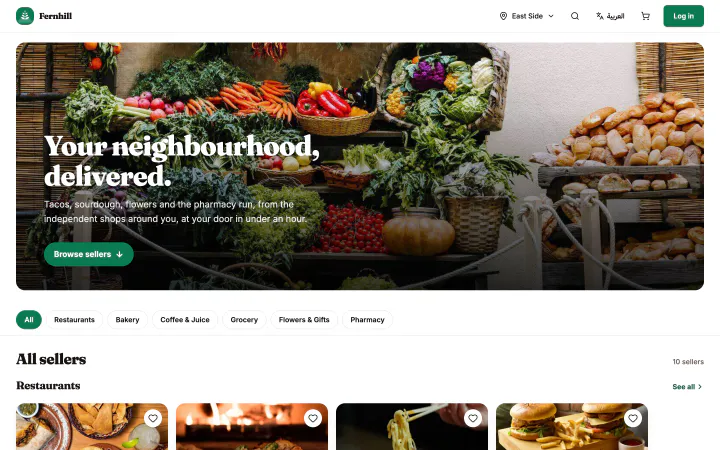
Storefront websiteYour storefront website: the city's pet shops, with categories you name. Dog, cat, small animals.
-
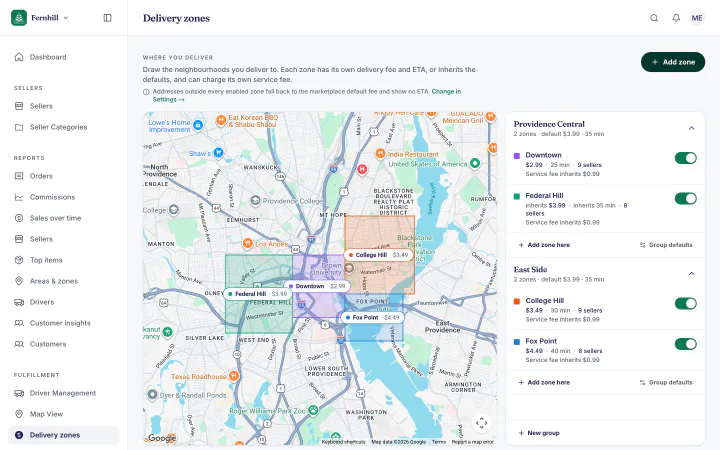
Admin portalYou draw the zones and set each fee. Heavy goods want a fee that pays for a car.
-
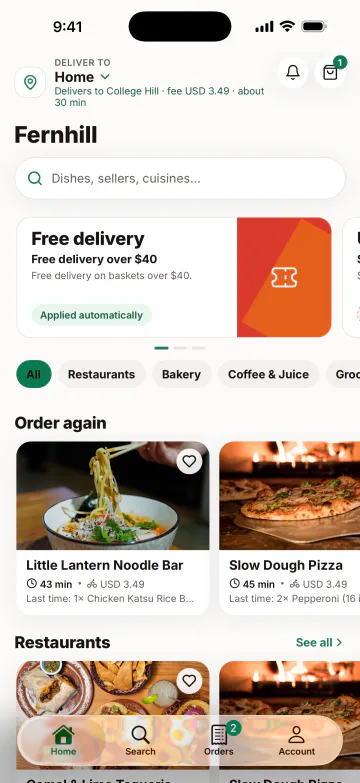
Customer appThe home screen puts the sellers a customer ordered from before at the top. Reordering starts there.
-
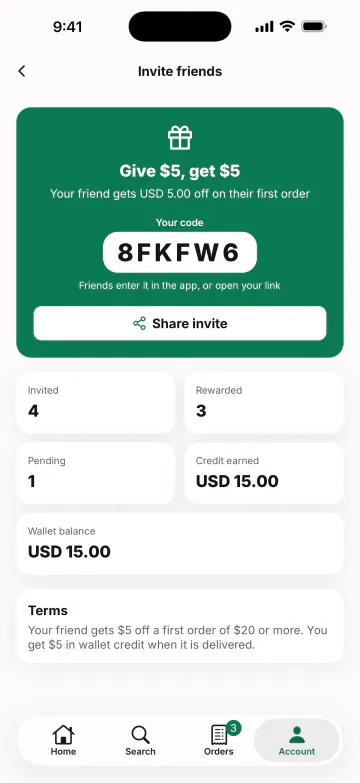
Customer appPet owners know other pet owners. Give them a code that pays both sides.
-
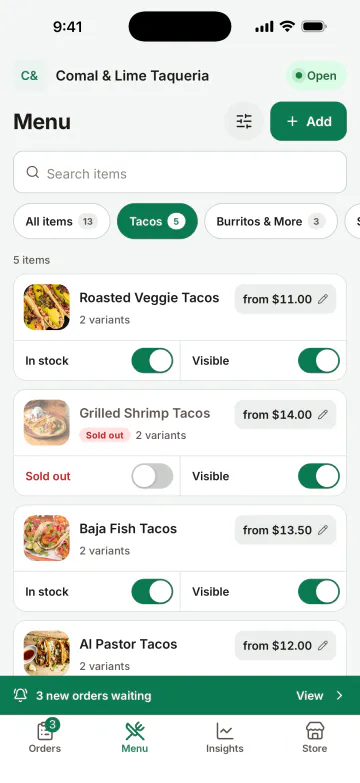
Seller appThe shop switches a product off when the pallet runs out.
-
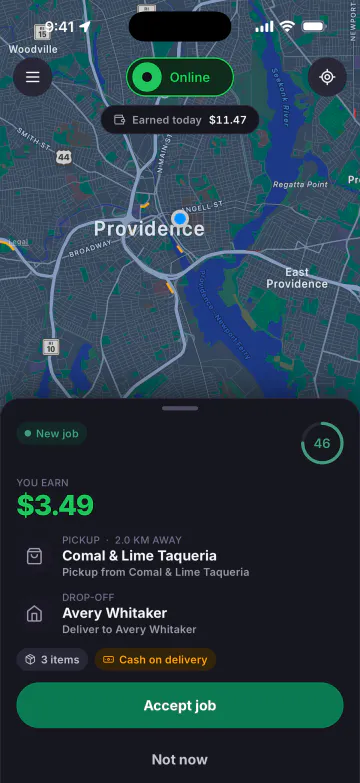
Driver appThe driver sees the job, the pay and the drop-off before accepting.
-
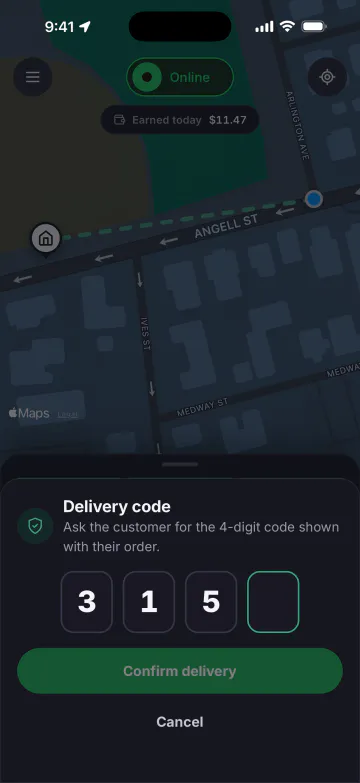
Driver appThe hand-over code confirms the bag reached the customer.
Not built yet, and what version one does instead
- Subscriptions: the same order every month, automatically
- There are no recurring orders. The customer reorders by hand. Version one makes that easy and worth it: their past sellers are on the home screen, and you send a promo code when the bag should be running low.
- Telling drivers an order is heavy
- A job offer shows the pickup, the drop-off and the pay, not the weight. Recruit drivers with cars for this marketplace, and say so when you sign them.
- Card payments
- Orders are paid in cash today. See “How you get paid” above for how the money moves.
What you would run it on
- The storefront website and the admin portal are in every plan. Enough to prove LeashLocal with your first sellers.
- Your own customer and seller apps in the app stores come with the next plan up, along with the driver app for your first five drivers.
- Unlimited drivers come with the plan above that. On the first plan, start with pickup or let sellers hand orders over themselves.
The LeashLocal launch checklist.
-
Week 1
List the shops
- Find every independent pet shop and feed store in the city.
- Ask each what their regulars reorder monthly.
- Tell us what you are building; we set up your storefront.
-
Week 2
Sign eight shops
- Agree a commission that works on a known-price bag.
- List each shop's top twenty repeat products.
- Recruit three drivers with cars.
-
Week 3
Win the regulars
- Put a reorder card in every bag sold over the counter.
- Run twenty test deliveries, heavy bags included.
- Set zone fees that cover a car trip.
-
Week 4
Start the clock
- Launch with a first-order promo code.
- Note each customer's order date and nudge them in four weeks.
- Turn on give-and-get referrals.
Read before you start, from Marketplace University
-
Getting Started
Your First 30 Days: A Launch Checklist for a New Marketplace
From describing your idea to going live under your own brand — a practical week-by-week checklist for launching a hyper-local marketplace.
-
Referrals & Word of Mouth
How to Turn Your First Customers Into Your Referral Engine
A new marketplace's first real growth channel usually isn't ads — it's the small group of customers who already like it.
-
Customer Experience
The Psychology of Free Delivery
45% of shoppers abandon carts over shipping costs — why 'free delivery' moves purchase decisions more than the price tag itself.
Ideas next door.
-
Retail
Pickup
Handmade Row
Your city's makers on one storefront, with same-day pickup. They make it. You sell it down the street, as gifts people need today, for a commission they can live with. You could earn, at 15 orders a day $2,430 / month -
Retail
Delivery
PetalBlock
Your city's real florists, on one storefront. They arrange it. You send the orders, straight to a real local shop, and keep a commission the shop agreed to. You could earn, at 20 orders a day $7,050 / month -
Retail
Pickup
SecondLap
Every thrift and consignment shop in town, in one feed. They sort it. You put the best of it online for local pickup, and earn a commission on each piece. You could earn, at 15 orders a day $1,512 / month
Nobody owns LeashLocal in your city. Yet.
Tell us where you would start. Our team sets up your storefront with you: your name, your sellers, your commission, live in under a week.
Opens our contact form with this idea filled in. Rather talk first? Book a demo.