Marketplace ideas Retail · Pickup
SecondLap
Every thrift and consignment shop in town, in one feed.
They sort it. You put the best of it online for local pickup, and earn a commission on each piece.
- An idea. Not a company. Yet.
Fix one thing Our verdict on Pitch Night. Why ↓
- Orders a day
- 15
- Average order
- $28
- You earn, a month
- $1,512
An estimate from illustrative numbers (the “growing” stage), not a promise. Change every one of them ↓
One of everything, and no way to see it without going in.
Americans threw out 17 million tons of textiles in 2018, by the EPA’s count. The shops that keep clothes in use, thrift, consignment and vintage, are full of good things nobody can see without walking in and going through the racks.
Supply is not the problem: Pitch Night scored it five out of five. The work is. Every piece is a one-off. Somebody has to photograph it, price it and take it down when it sells. The big resale apps hand that job to individual sellers. A shop with three thousand pieces cannot do it for all of them.
So fix one thing. Do not list everything. List each shop’s best fifty, keep it fresh, and make your feed the place people check before they cross town.
- 17M tons of textiles thrown out by Americans in 2018 Source: US Environmental Protection Agency, 2018
Fix one thing
The Pitch Night verdict
List each shop's best fifty pieces, not everything.
- Demand
- Supply
- Margin
The hard question: Who lists every one-off item?
Who sells. Who buys.
Your sellers
Thrift stores, consignment boutiques, vintage shops and charity shops. They have more stock than they can show and a back room full of things nobody has seen. Every piece is a one-off, and listing it takes longer than selling it.
Where to find the first ten
- 1Start with curated consignment and vintage shops. Their pieces are worth photographing.
- 2Ask each shop for its best fifty pieces. That is the fix, and it is a one-afternoon job.
- 3Offer to do the first shoot yourself, with a phone and a white wall.
- 4Sign shops that already sell through Instagram stories. They list daily without knowing it.
- 5Leave the giant charity warehouse for later. Volume is not your friend here.
Your buyers
People who like the hunt but not the digging: students, vintage fans, parents buying children's clothes that will fit for three months. They want to know the jacket is there before they cross town.
How often they come back
Browsers come back often, because the stock changes daily. Buying is less regular. A feed that is fresh every morning is the product.
How you get paid.
-
Commission
Consignment shops already split every sale with the item's owner, so their own share is thin. Keep your rate low and earn it on pieces that would not have sold from the rack.
On Upzaar: one rate for the marketplace, with an override per seller. Not per category.
-
Service fee
Leave it out. Second-hand buyers are price-sensitive by definition.
On Upzaar: one flat fee per order, paid by the customer. The marketplace keeps it.
Know this before you start: orders are paid in cash today.
The customer pays the seller in person. Card payments are not live yet. That means the seller holds the money and owes you your commission and fee: the commissions report shows what each seller sold and what is yours. Plan a weekly settlement, and sign sellers who are fine with that.
What could SecondLap earn you?
Prefilled with our starting assumptions for this idea. Every number is yours to change, and the formula is at the bottom.
Estimate
You earn, per month
An estimate, not a promise$1,512
Before your costs. 12.0% of the order volume.
- Commission
- $1,512
- Service fees
- $0
Change the numbers
- Orders per day
- 15
- Average order value
- $28.00
- Your commission
- 12%
- Your service fee per order
- $0.00
- Days open per month
- 30
This is a worked example. With JavaScript on, you can change every number.
The month
- Orders
- 450
- Order volume (GMV)
- $12,600
- Your sellers keep
- $11,088
One order
- The customer pays
- $28.00
- The seller keeps
- $24.64
- You earn
- $3.36
What your sellers pay in commission, per month
$2,268 a month stays with your sellers. 30% is the published top-plan commission; ads, promos and refunds are extra. Sources: Uber Eats merchant pricing, Restaurant Dive on DoorDash’s plans .
Same numbers, three stages
Only the orders per day change. Pick one to load it.
How this is calculated
- Commission is taken on the order value only, not on delivery or service fees.
- The currency menu swaps the symbol. There is no exchange rate anywhere.
- Not subtracted: your Upzaar plan and its platform fee on order volume (see pricing), payment processing if you add a card gateway, marketing, and your own time. The break-even calculator takes those off.
- Promotions, refunds and canceled orders are not modeled. Real months are lumpier than this.
Where the prefilled numbers come from
- Orders per day (illustrative): Illustrative, and small: Pitch Night scored demand 3 and margin 2 out of 5. 15 orders a day is one piece a day from each of 15 shops.
- Average order value (illustrative): Illustrative. One good second-hand piece.
- Commission (illustrative): Illustrative. Low, because consignment shops already share each sale with the item's owner.
- Service fee (illustrative): None.
- Days open (illustrative): The feed is open every day.
Illustrative means we picked a plausible starting point and told you why. It is not data about a real marketplace. Replace it with what you learn from your own sellers.
What SecondLap looks like on Upzaar.
Real screens from Fernhill, our demo marketplace of local food and shops. Yours carries your name, your colors and your sellers. This idea starts with pickup, so there is no driver app here.
-
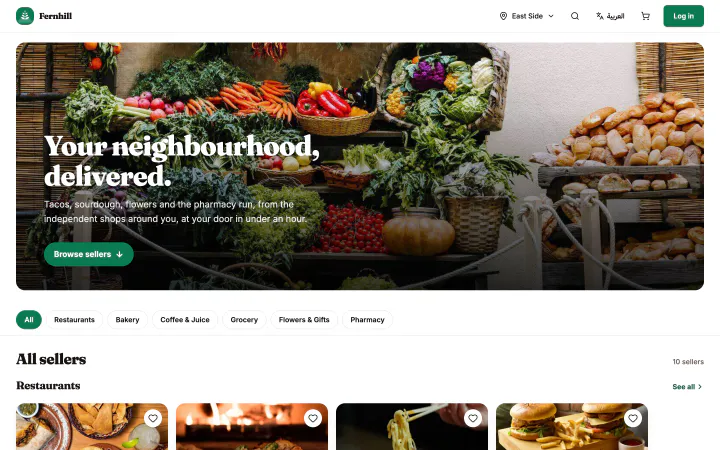
Storefront websiteYour storefront website: every second-hand shop in town, each with its own page.
-
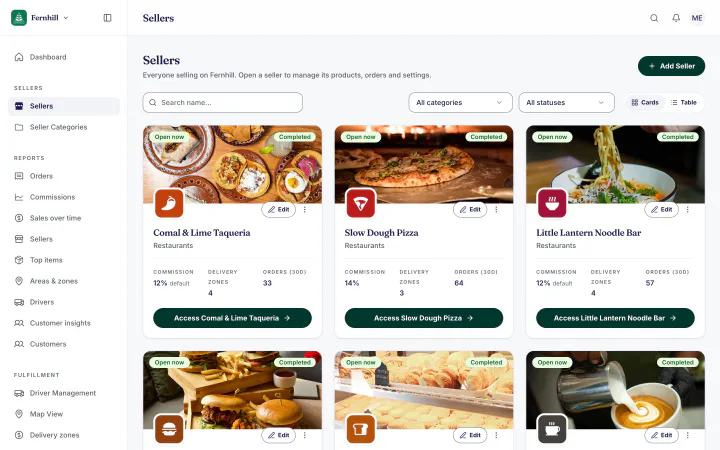
Admin portalEvery shop on your marketplace, with its orders and the commission rate you agreed.
-
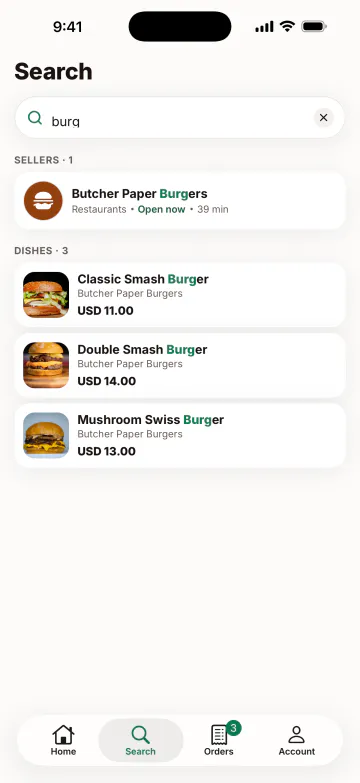
Customer appA buyer searches for a denim jacket and sees which shop has one.
-
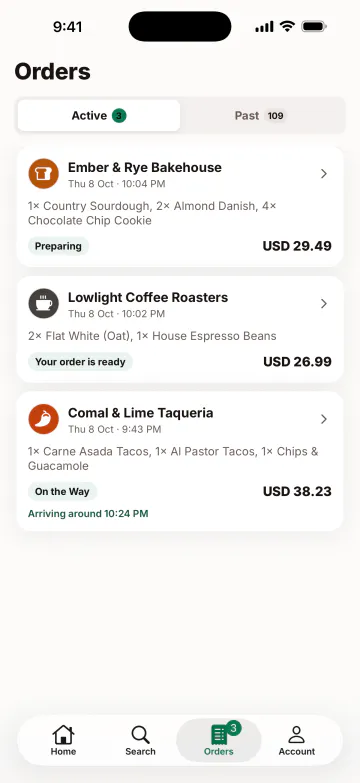
Customer appThe buyer sees when the piece is set aside and ready to collect.
-
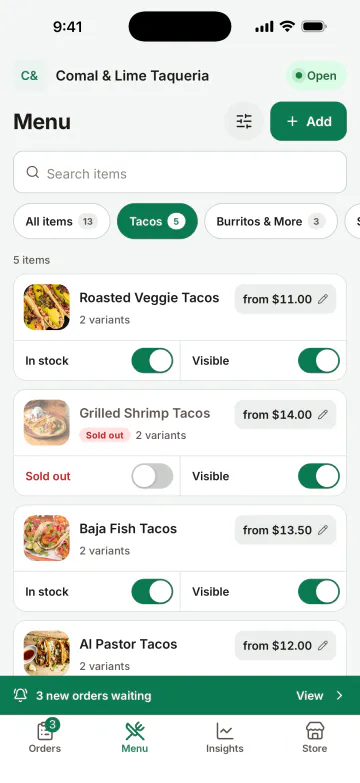
Seller appA one-off sells in the shop? The owner switches it off in two taps, so nobody orders a jacket that is gone.
-
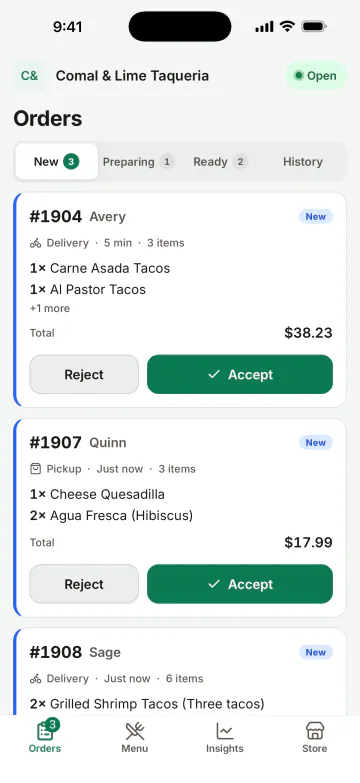
Seller appThe shop's orders in one list: new, being set aside, ready.
Not built yet, and what version one does instead
- Stock that sells out by itself
- Inventory is not counted: an item is in stock until the shop switches it off, including after an online sale. With one-offs that is a daily chore. It is the practical reason to list fifty pieces a shop, not five hundred.
- Someone to do the listing
- Nothing photographs and lists a shop's stock for it. Each piece needs its own photo, price and listing. Budget an afternoon per shop for the first fifty.
- Shipping
- Local pickup and local delivery only, no parcel carriers. Start with pickup.
- Card payments
- Orders are paid in cash today. See “How you get paid” above for how the money moves.
What you would run it on
- The storefront website and the admin portal are in every plan. Enough to prove SecondLap with your first sellers.
- Your own customer and seller apps in the app stores come with the next plan up.
The SecondLap launch checklist.
-
Week 1
Pick the curated ones
- List the consignment and vintage shops in your city.
- Visit ten and look at what they would photograph.
- Tell us what you are building; we set up your storefront.
-
Week 2
Shoot the best fifty
- Sign ten shops and agree a commission.
- Photograph fifty pieces per shop, one afternoon each.
- Teach each owner to switch a sold piece off.
-
Week 3
Keep it fresh
- Agree a rhythm: ten new pieces per shop per week.
- Buy ten pieces yourself and collect them.
- Check how many listed pieces were already gone.
-
Week 4
Open the feed
- Launch to students and vintage groups in your city.
- Post the best new pieces every morning.
- Settle with shops and drop the ones that do not update.
Read before you start, from Marketplace University
-
Cold Outreach
Where to Find Your First Vendors (Before You Have Any Customers)
You don't need a big audience to land your first vendors — you need the right handful of places to look.
-
Cold Outreach
How to Write a Cold Outreach Message Vendors Actually Reply To
Most vendor cold outreach gets ignored because it reads like a form letter. Here's how to write the kind that gets a reply.
-
Getting Started
How to Choose the Right Marketplace to Build
Digital, physical, or service-based — how to pick the marketplace type that actually fits the opportunity in front of you.
Ideas next door.
-
Retail
Pickup
Handmade Row
Your city's makers on one storefront, with same-day pickup. They make it. You sell it down the street, as gifts people need today, for a commission they can live with. You could earn, at 15 orders a day $2,430 / month -
Retail
Delivery
PetalBlock
Your city's real florists, on one storefront. They arrange it. You send the orders, straight to a real local shop, and keep a commission the shop agreed to. You could earn, at 20 orders a day $7,050 / month -
Retail
Delivery
LeashLocal
Independent pet shops, delivered. The heavy bag arrives every month. They stock the food. You bring it to the door on repeat, and earn on an order that comes back every month. You could earn, at 25 orders a day $4,875 / month
Nobody owns SecondLap in your city. Yet.
Tell us where you would start. Our team sets up your storefront with you: your name, your sellers, your commission, live in under a week.
Opens our contact form with this idea filled in. Rather talk first? Book a demo.